
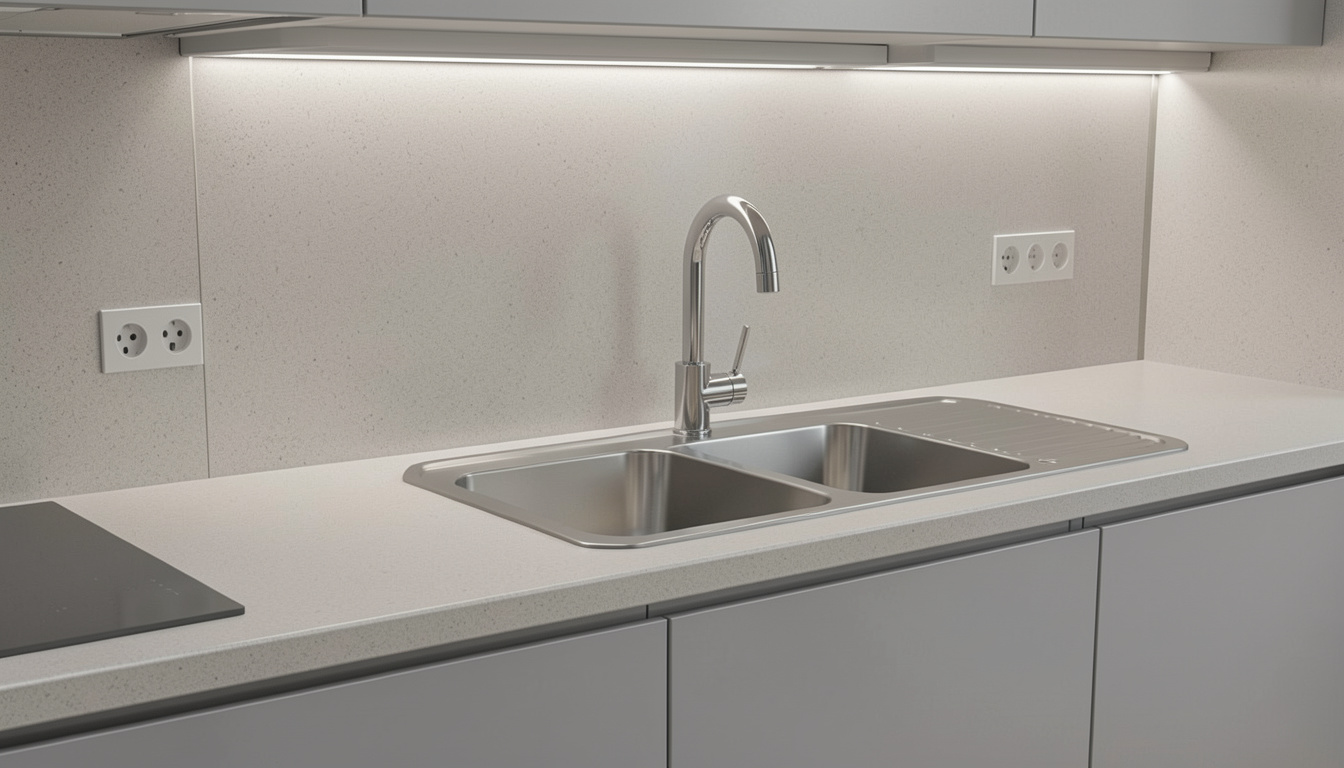
A well designed kitchen is not just about appearance. It is about how surfaces perform under daily use, how easily they can be cleaned, and how well they hold up over time. Whether in a residential setting or a commercial kitchen, the combination of benchtops, splashbacks, and sinks plays a central role in both function and hygiene.
Getting these elements right requires practical thinking. Materials, layout, and installation details all contribute to a workspace that feels efficient rather than frustrating.
Why Material Selection Shapes Everyday Use
Kitchen surfaces deal with constant exposure to heat, moisture, food acids, and cleaning chemicals. Choosing materials that can withstand this environment is essential.
According to a 2024 report by the Australian Institute of Food Safety, poor surface selection and maintenance remain a leading contributor to contamination risks in both commercial and domestic kitchens. Surfaces that are non porous and easy to sanitise are strongly recommended.
This is one reason stainless steel continues to be widely used. It resists corrosion, handles temperature changes well, and provides a hygienic surface when properly maintained.
A commercial kitchen designer in Perth once explained it simply
“If a surface is difficult to clean, it will not be cleaned properly during a busy shift. That is where problems start.”
Benchtops That Balance Strength and Practicality
Benchtops are the primary working surface in any kitchen. They need to handle cutting, preparation, and occasional impact without deteriorating.
Stainless steel benchtops are a common choice in professional environments because they combine durability with hygiene. They do not absorb liquids, which reduces the risk of bacterial growth. They also tolerate heavy use without cracking or chipping.
Thickness and reinforcement are important considerations. A thin sheet without proper support can flex under pressure, which affects both usability and longevity. Reinforced undersides or integrated frames help maintain a solid working surface.
Edge profiles also matter more than many expect. Rounded or folded edges improve safety and make cleaning easier by eliminating sharp corners where debris can accumulate.
Splashbacks That Protect and Simplify Cleaning
Splashbacks serve a practical purpose that goes beyond aesthetics. They protect walls from water, oil, and food splatter while making cleaning more efficient.
In high use kitchens, stainless steel splashbacks are often preferred because they provide a seamless, wipeable surface. Unlike tiled finishes, they do not have grout lines that can trap dirt and require extra maintenance.
Height and coverage should be planned carefully. Areas behind cooktops and sinks typically need full height protection, while other sections may only require partial coverage.
Reflectivity can also be an advantage. Stainless steel surfaces help bounce light around the kitchen, improving visibility in work areas.
Choosing the Right Sink Configuration
The sink is one of the most frequently used components in any kitchen. Its design affects workflow, cleaning efficiency, and even hygiene compliance.
Single bowl sinks offer simplicity and are often sufficient for smaller kitchens. However, double bowl configurations provide greater flexibility, allowing users to separate washing and rinsing tasks.
Depth is another important factor. Deeper sinks help contain splashes and accommodate larger cookware, but they should still be comfortable to use without causing strain.
Drainage design should not be overlooked. Proper slopes and outlet positioning ensure water flows efficiently, preventing pooling and reducing cleaning effort.
Integrating Surfaces for Better Hygiene
One of the most effective ways to improve kitchen hygiene is to reduce joints and seams. Integrated designs where benchtops, splashbacks, and sinks connect smoothly help eliminate areas where dirt and bacteria can accumulate.
Welded or seamlessly joined components are often used in commercial settings for this reason. They create a continuous surface that is easier to clean and maintain.
This is where stainless steel sheet fabrication becomes particularly useful. It allows for custom shaping and joining, enabling designers to create tailored solutions that fit specific kitchen layouts without unnecessary gaps.
Installation Details That Influence Long Term Performance
Even the best materials can underperform if installation is not handled properly.
Benchtops should be securely fixed and properly supported to prevent movement. Any flexing over time can weaken joints and create alignment issues with sinks or splashbacks.
Sealing is critical around sink edges and wall connections. Proper sealing prevents water from seeping into underlying structures, which can lead to damage and hygiene concerns.
Level installation is equally important. Uneven surfaces can cause water to pool, making cleaning more difficult and increasing wear in certain areas.
Maintenance Practices That Keep Surfaces Performing
Stainless steel surfaces are relatively easy to maintain, but they still require regular care.
Daily cleaning with appropriate products helps preserve both appearance and hygiene. Abrasive materials should be avoided as they can scratch the surface, making it harder to clean over time.
Periodic inspection is also useful. Checking seals, joints, and drainage ensures that small issues are addressed before they become larger problems.
One advantage of stainless steel is that it does not require sealing or special treatments like some other materials. This simplifies long term upkeep and reduces ongoing costs.
Balancing Aesthetics with Functionality
While performance is essential, visual appeal still matters, especially in open kitchens or customer facing environments.
Stainless steel offers a clean, professional look that suits both modern residential designs and commercial spaces. It pairs well with other materials such as timber or stone, allowing for a balanced aesthetic.
Finishes can vary from brushed to polished, each offering a different visual effect. Brushed finishes are often preferred for working areas because they help conceal minor scratches.
Common Mistakes to Avoid
One common mistake is prioritising appearance over practicality. Materials that look appealing but cannot handle daily use often lead to frustration and additional costs.
Another issue is poor integration between components. Gaps between benchtops, splashbacks, and sinks can create cleaning challenges and hygiene risks.
Finally, neglecting proper installation and sealing can undermine even the best material choices.
Conclusion
Designing a kitchen that performs well over time requires attention to detail and a clear understanding of how each component interacts. Benchtops, splashbacks, and sinks are not separate elements but parts of a unified system.
By selecting durable materials, ensuring proper installation, and maintaining surfaces consistently, it is possible to create a workspace that supports both efficiency and hygiene.
For those seeking a reliable and adaptable solution, stainless steel sheet fabrication continues to provide the flexibility and performance needed to meet the demands of modern kitchens.